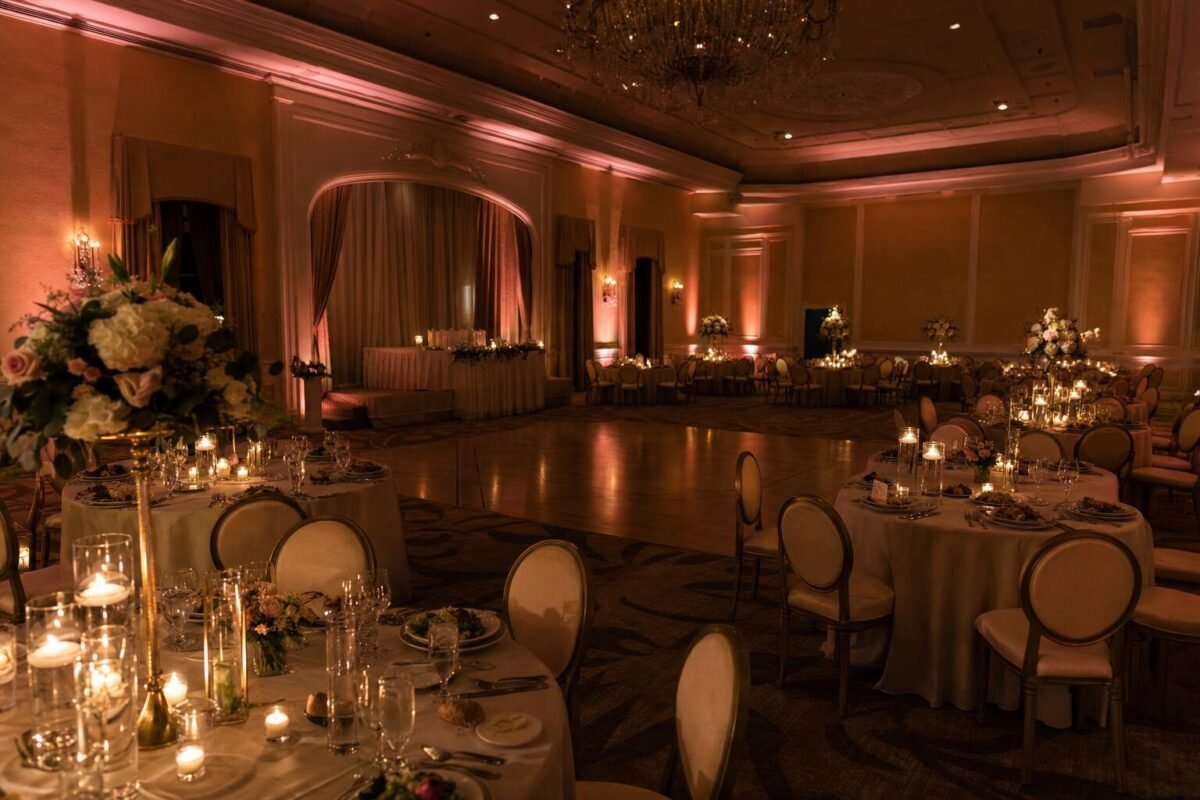
Lighting changes how a room feels more than almost anything else you add to an event. The same ballroom can look flat and plain under house lights, then warm and polished once the walls glow and the dance floor comes alive. This guide explains the main types of event lighting, how to pick colors, what to ask your venue, and when it makes sense to hire a pro.
Whether you are planning a wedding, a corporate party, a mitzvah or a birthday in Los Angeles or Orange County, the same basic rules apply. Start with the mood you want, then choose the lights that create it.
Types of Event Lighting and What Each One Does
Most great event designs layer a few types of light together. Here is what each one brings to the room.
Uplighting
Uplights are small LED fixtures placed on the floor that shine up onto walls, columns, drapes or trees. They are the fastest way to add warmth and color to a space. They also hide plain walls and show off architecture you want guests to notice. Modern uplights are usually wireless and battery powered, so there are fewer cords on the floor and setup is quicker.
Pin Spots
A pin spot is a narrow beam aimed at one thing. Think centerpieces, the cake, a dessert table or a sign. When the room lights are dimmed, pin spots make those details stand out and look great in photos.
Dance Floor and Moving Lights
Dance floor lighting is where the energy comes from. Moving head fixtures can sweep beams across the ceiling, throw color onto the crowd, or spotlight a first dance. Washes, beams and effect lights work together to make the floor feel like a party. Pair them with an LED dance floor and the whole space reacts to the music.
Gobo and Monogram Projection
A gobo is a stencil placed inside a light so it projects a shape. It can be a pattern like leaves or stars, a couple’s initials, or a company logo. Monograms on the dance floor are a favorite for weddings. Logos on a wall or above the bar work well for brand events. Custom gobos need to be ordered ahead, so plan for that in your timeline.
String Lights and Outdoor Lights
String lights, also called bistro or festoon lights, hang overhead and give a soft, cozy glow. They work in backyards, on patios and rooftops, and even inside plain warehouses. Hanging them across a space also makes a large area feel more intimate.
Intelligent Programmed Lighting
Intelligent lights are fixtures controlled by a lighting console or software. They can be programmed to change with each part of the night. Calm colors during dinner, a spotlight during toasts, then full motion and color once the dancing starts. When lighting is run by the same team as the DJ, cues can follow the music and the timeline so every moment feels planned.
Ambient Lighting for Ceremony and Dinner
Ambient lighting sets the base level of light in the room. For a ceremony, you want soft, even light so faces look natural and guests can see. For dinner, lower and warmer light helps people relax and talk. Candles, warm washes and dimmed house lights all play a part here.
How to Choose Colors and Match Your Venue
Color is the biggest choice you will make. A few simple rules help.
- Warm tones flatter people. Amber, gold and soft champagne make skin look good and feel inviting. They are a safe pick for weddings and any event where photos of guests matter.
- Cool tones feel modern. Blues and purples look sleek and work well for corporate events and parties. Use them on walls and away from faces, since they can make skin and teeth look odd in photos.
- Match your decor. Pull one or two colors from your flowers, linens or brand. Too many colors at once can look busy.
- Work with the walls. Light colored walls take color well. Dark wood or busy wallpaper absorbs light, so you may need brighter fixtures or a different color.
- Plan changes through the night. LED fixtures can switch colors, so dinner can be warm and the dance floor can be bold.
If you can, ask to see a test or photos of the colors in a similar room. What looks good in person does not always look the same on camera.
How Many Uplights Do You Need?
There is no single number that fits every room. It depends on the space and the look you want. These are the main factors:
- Wall length. Longer walls need more fixtures to avoid dark gaps.
- Ceiling height. Tall walls need brighter lights or closer spacing to reach the top.
- Columns and features. Each column, arch or feature you want to highlight usually gets its own light.
- The look. An even wash of color needs tighter spacing. A softer look with pools of light between fixtures needs fewer.
- Wall surface. Dark or textured walls need more output than smooth, light walls.
The best way to get the count right is a walkthrough or a look at venue photos and a floor plan. A lighting team can then map where each fixture goes.
Planning Lighting With Your Venue
Good lighting starts with a few questions to your venue coordinator. Ask them early so there are no surprises on the day.
- Power. Where are the outlets, and how many circuits are near the dance floor and stage? Lights, sound and catering all share power. Not checking this is one of the most common problems with event lighting.
- Load in and load out. When can your vendors arrive, and how long do they have to set up and strike? Is there a loading dock or elevator?
- Rules. Some venues limit haze, open flames, hanging items from ceilings or taping to walls. Some require vendor insurance certificates.
- House lights. Can the room lights be dimmed? Who controls them during the event?
- Timeline. Share your schedule so lighting changes line up with the ceremony, dinner, toasts and dancing.
For bigger events, book lighting a few months ahead. Smaller parties can often be planned with a few weeks notice, but popular dates fill up fast.
DIY vs Professional Event Lighting
You can rent a few uplights and set them up yourself. For a small party at home, that can work fine. You choose the colors, place the lights and pick them up after.
For weddings, larger rooms and anything with moving lights or custom gobos, a professional team is usually the better choice. Here is why:
- They know how to place fixtures for the best look and the best photos.
- They handle power, cables and safety, so nothing trips a breaker or a guest.
- They program and run intelligent lights during the event.
- They work with the venue on load in, rules and timing.
- They fix problems on the spot, so you do not have to.
Prices vary a lot. Basic uplight rentals sit at the low end of the market, while full service designs with moving lights and a technician on site cost more. The cleanest way to compare is to ask for a quote based on your venue and guest count. You can see what a full setup includes on our event lighting rental page.
Outdoor Event Lighting Tips
Southern California is perfect for outdoor events, but outdoor lighting needs extra planning.
- Think about sunset. Lights you barely notice at 6 pm become the main look by 8 pm. Plan for the room after dark.
- Light the paths. Guests need to see steps, walkways and restroom routes. Low path lights and lit plants help with safety and look nice too.
- Use trees and plants. Uplighting trees and hedges adds depth to a garden or backyard.
- Plan for power and weather. Outdoor sites may need extension runs, generators or battery fixtures. Make sure gear is rated for outdoor use and protected from wind and moisture.
- Check local rules. Some neighborhoods and parks have limits on noise and lights after a certain hour.
Event Lighting FAQ
What is the most popular type of event lighting?
Uplighting is the most common choice. It adds color and warmth to almost any room with very little setup, and it works for weddings, parties and corporate events.
What color uplighting is best for a wedding?
Warm amber, gold and champagne tones are the safest picks. They flatter skin in photos and match most decor. You can add a bolder color for the dance floor later in the night. Our wedding DJ packages can include lighting that changes with each part of your day.
How far ahead should I book event lighting?
For weddings and large events, a few months ahead is ideal, especially if you want custom gobos. Smaller parties can often be booked a few weeks out, depending on the date.
Do I need a technician on site?
For simple uplighting, usually not. If you have moving lights, programmed cues or a lighting change for key moments, a technician makes sure everything runs on time.
Can lighting be synced with the music?
Yes. When your DJ and lighting are handled by the same team, the lights can follow the energy of the music and the event timeline, from a calm dinner to a full dance party.
Plan Your Event Lighting With DJService.pro
DJService.pro provides DJ, sound and event lighting in Los Angeles, Orange County and across Southern California. Tell us about your venue, your guest count and the mood you want, and we will put together a lighting plan that fits. Call us at 323-413-7099 or send us your event details for a free quote.
